
Operational frictions: how to identify what's really slowing your business down
You can love working in Ops and still have days where you’re not all that excited about opening your laptop. And no, there’s no major drama to deal with. No fires to put out. No emergency or incident.
If nothing is technically wrong, what is it then?
Well… it’s a build-up of smaller things: repeated conversations, constantly chasing updates, messy handovers, work dragging longer than expected, projects unable to move forward, and so on… We notice these things. We know they cause frustration daily and sometimes make our jobs harder than they need to be, but we tend to ignore them because there are more serious issues to deal with. Besides, shouldn’t teams deal with some of their own problems?
But every now and then (especially on a bad day) it comes back to us. Perhaps these aren’t just everyday frustrations. Perhaps they’re operational frictions? Perhaps we, Ops leaders, should be tackling them? Well… yes, there’s a good chance they lead back to Operations and if they do, we should absolutely tackle them. But... not so fast.
Before jumping in to fix things, it’s important to understand what’s actually causing those frictions. It’s quite common to look at surface-level issues, make assumptions, and react to symptoms. But what we really need is to understand the root causes and identify where the business is struggling most, so we can make changes that help the business operate more effectively and support growth. In this article, we’ll look at the key areas creating friction in day-to-day operations, the signals to pay attention to, and how to prioritise what needs fixing first.
Why business struggles are often not what they seem
At this stage, you might still feel a bit confused. So repeated conversations, messy handovers, or work dragging are indeed operational frictions? We should tackle them, but not without proper diagnostics first? And what exactly are we even looking for?
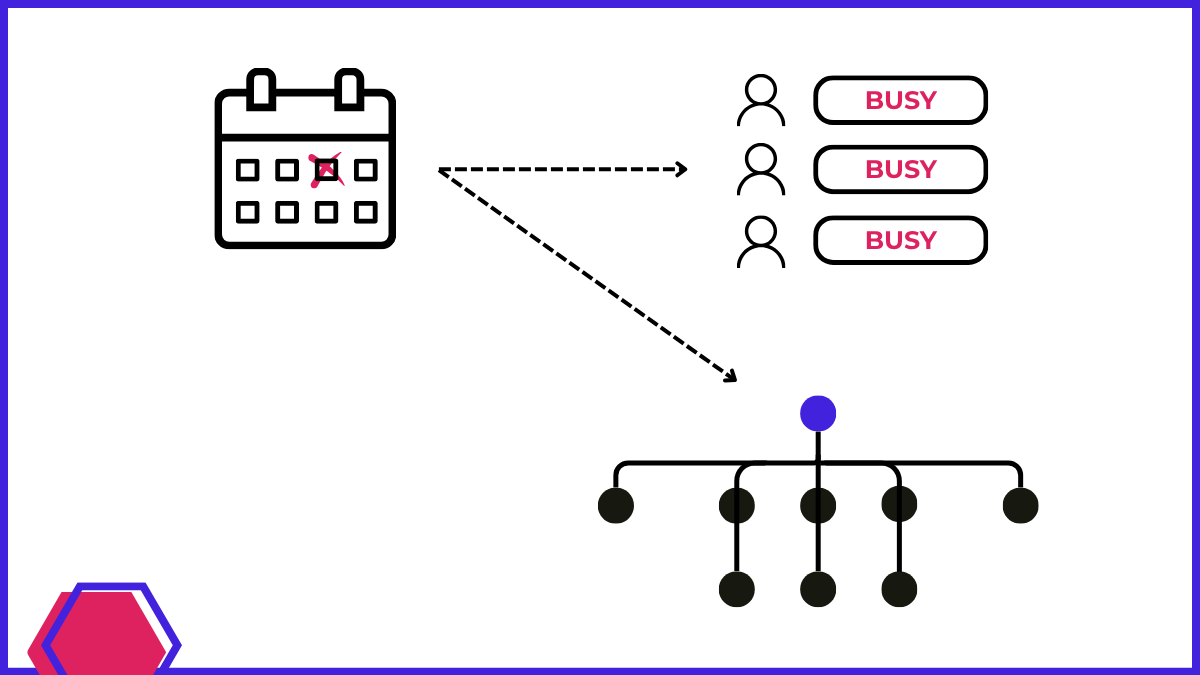
Operational frictions can be layered and surprisingly difficult to diagnose. What looks like one issue on the surface is often caused by something entirely different underneath. Let’s take work dragging as an example. At first glance, it may look like a capacity issue. Teams are too busy, workloads are too high, perhaps you need more people. Or maybe it feels like an efficiency issue and teams simply aren’t managing their workload well enough. But when you dig deeper, you may realise work is actually dragging because people are waiting for decisions to be made. And when you dig deeper again, you might discover that too many decisions depend on the same few people, so the real issue is centralised decision-making. Work dragging was only a symptom.
And this is really the essence of what makes operational frictions difficult to diagnose. Businesses tend to react quickly to the problems at hand without properly assessing them first. But what’s in front of us, what’s visible on the surface, is often just a symptom. And symptoms can be misleading. They overlap, connect across different areas, and can point us in the wrong direction, while the real root causes sit elsewhere.
The symptoms
Let’s talk a bit more about the symptoms. We won’t go through every possible frustration you might notice in day-to-day operations. That would be impossible, and probably not very useful. But I do want you to recognise some common ones and use them as clues to dig a bit deeper instead of jumping straight to conclusions about what’s really causing them.
So here they are:
The same conversations keep happening
Work gets redone or corrected repeatedly
Work gets started and then forgotten about or falls through the cracks
Handovers between people or teams feel messy
Projects are moving forward slowly and painfully
People need to be actively chased for information, progress, and updates
Excuses and blame have become common (and accepted)
Customer complaints or frustrations have become more frequent
People rely heavily on shortcuts and workarounds to get things done
Teams feel too overwhelmed or resistant to engage with improvements and new ideas
So you spot one (or many!) of those in your business… and what then?
The Big Four
I'm absolutely not saying that every symptom above will always come from the Big Four, but if you keep spotting them, these are the first places I'd investigate. By connecting symptoms with signals, you'll start seeing whether one of the Big Four may be contributing to those symptoms, fully responsible for them, or if the real issue lies elsewhere.
Decisions
Scaling businesses often struggle to recognise when they have decision-making problems. One of the reasons is that decision-making is probably one of the hardest things to let go of, especially in founder-led businesses. It creates a sense of control, visibility, and staying connected to what’s happening across the business. At the same time, businesses also know they can’t give decision-making power to everyone because that would create chaos. So the decision-making part often stays untouched for too long. The tricky part is also that decision-related frictions are not always easy to recognise and therefore often get mistaken for communication issues, workload problems or poor execution.
However, signals like:
Decisions are made, but don’t stick
It’s unclear who should be making decisions
Too many decisions depend on the same few people
Decisions become reactive and happen on the go
send a fairly clear message that the business is struggling with decision-making.
As reluctant as businesses may be to make changes in this space, leaving decision-making issues unresolved makes businesses slower, more reactive, and increasingly dependent on a small number of people. Over time, this can become one of the biggest obstacles to effective scaling.
Ownership
What often happens when we start noticing frustration, blame, excuses or disengagement within teams? And let me just say it here, if you've never experienced those, then WOW! But realistically most businesses experience them at least once in a while, and usually more often as they start scaling.
First instinct? We usually assume we have people problems. We might think there are communication issues, personality clashes within the team, some people have checked out (perhaps they want to leave?), or even blame managers for not managing well enough. Hell, we might even feel like we’ve got a drama queen on the team. Or two. Or many. What happened to the can-do attitude?! And those things may indeed be true. Sometimes. Other times, there’s simply more to it.
From my experience, start-ups and small businesses rarely spend much time thinking about ownership properly. People get hired against fairly generic job descriptions and then simply crack on with work because there’s a lot to get done. Roles evolve, responsibilities change, but ongoing conversations around ownership and expectations often get pushed aside because there never seems to be enough time for them. Plus, if everyone already knows what they’re doing, is it really necessary?
But this is often the beginning of ownership-related frictions building underneath the surface. As businesses scale, new people get hired fast and existing roles keep evolving, while work becomes more complex. Some responsibilities start to overlap and sit between people and teams. Sometimes, key responsibilities may have no real owner, while other areas become heavily dependent on the same handful of people.
Ownership is frequently overlooked as a source of business problems. But now that you know it can be, it’s worth looking at how ownership is actually designed and distributed across your business, whenever you face challenges in your business.
If you notice signals like:
Ownership is unclear (work sits between people)
Ownership exists, but doesn’t hold (constant checking, chasing, stepping in)
The same few people seem responsible for most things
When things go wrong, blame and excuses quickly follow
that usually means there’s work to be done on ownership.
Core workflows
Workflows and processes are not exactly the most exciting part of running a business. That's just a fact. Where's the fun in doing the same thing the same way over and over again? They're often seen as a necessary evil. But just as often, they're not seen as necessary at all. If clients are happy, work gets done, and money keeps coming in, who cares? Well, let's see.
How often does work need to be redone because of mistakes, missed steps, or shortcuts taken along the way?
How often do teams end up having heated conversations because handovers are messy and expectations unclear?
And how often (be honest here) did a deadline only get met because the team pulled off a last-minute rescue mission?
Some businesses have become surprisingly good at overlooking or working around workflow issues (I've seen some master-level examples too). The irony is that those very workflows are often where the solution to many of their inefficiencies sits.
If you're noticing inefficiencies across your business, workflows are one of the first places I'd look. Signals like the ones below tend to point quite strongly towards workflow issues:
Work is reinvented every time
Work gets redone (mistakes, steps missed)
Recurring work creates friction between teams
Repeatable work takes longer than expected
Information
Everyone loves it when information flows smoothly through the business, don't we? And to be fair, that's usually quite easy in the early days. There's not a lot to manage: you document the basics, and everything else can be asked over a desk, in a meeting, or in a quick Slack message. As great as this sounds, most businesses don't get away with it for very long.
As businesses grow, so does the amount of information they need to manage. New information gets added constantly, old information becomes outdated surprisingly quickly, and before long businesses find themselves playing a constant catch-up game trying to keep everything organised, accessible, and up-to-date.
At some point, this can have serious business consequences, like missing a deadline because critical information didn't reach the right person on time. Or using outdated information to deliver client work. Things that can damage client relationships, reputation, and trust.
But even when nothing goes terribly wrong, don't underestimate the cost of searching, waiting, chasing, clarifying, and double-checking. That's the time and energy your team could be spending building, creating, and adding value instead.

If you're wondering whether information might be part of the problem, watch out for these signals:
Information is difficult to find
Information is outdated, incomplete or incorrect
Work gets delayed by waiting for information
People rely on assumptions when they can't find the information they need.
So, Where Do You Start?
When running your diagnostics, there’s a very good chance you’ll find issues across more than one of the Big Four. Or perhaps even all of them. Don’t panic. I know it can feel overwhelming, but this is actually quite common, especially in businesses that scale quickly.
The Big Four are broad areas, and each may contain multiple issues that need addressing. Trying to tackle more than one at the same time is not something I’d recommend. Not only is it difficult to execute (you’ll need the time, resources and focus to tackle each properly), but it also makes it harder to track progress and understand what’s actually improving the business. Pick one and give it your full attention. You're probably wondering now: which one do I pick first?
When deciding where to focus, there are three things I tend to look at.
Breadth
How many people, teams or parts of the business are affected by issues in this area?
If only a handful of people are affected, that's still not ideal, but it may not require immediate attention. If half of the business deals with the same issues, that's a very different situation. The more widespread the issues, the more pressure on a business to resolve them.
Frequency
How often do issues in this area show up?
Some issues only surface occasionally. Others create challenges every day. The more frequently they appear, the more attention they're likely to deserve.
Impact
What happens if we do nothing?
In some cases, not much. In others, customer complaints pile up, employees leave, risks increase or revenue gets affected. Think about the consequences of leaving the issue unresolved. The bigger the consequences, the higher the priority.
The area that scores highest across these three dimensions is your starting point.
Just as I mentioned before, there will likely be multiple issues to tackle within each of those areas. So whichever you pick first, you'll need to break the work down into smaller, manageable pieces and prioritise those too. The good news? You can use exactly the same three dimensions to decide what comes first as you work through each area.
Next steps
Look beyond the symptoms: Think about the key frustrations, problems and issues in your business. Instead of focusing on the symptoms themselves, ask what signals may be sitting underneath them. Check whether those signals fall under one or more of the Big Four.
Identify your starting point: If you're experiencing issues across multiple areas, determine which one is currently creating the biggest pressure on your business. Use Breadth, Frequency, and Impact to help you decide.
Break it down and take action: Once you've chosen where to focus, break the work down into smaller, manageable pieces. Pick one or two specific issues to tackle first (use the same three dimensions to pick your priorities). It will help you stay focused, make meaningful progress and avoid trying to fix everything at once.