
The Maturity Gap: When your business outgrows the way it operates
Scaling a business is an exciting phase for many organisations. It's something leaders work towards for years. You get to work with new customers, your team grows, revenue increases, bigger opportunities emerge and the business starts reaching places it couldn't have reached before.
You may be sensing a "but" coming. And you're right.
What many businesses don't think about (at least not at first) is how growth changes the way the business needs to operate. More people, more customers, more products and more moving parts make the business increasingly complex and harder to coordinate, communicate across teams and manage effectively.
What does that look like in practice? The people you used to rely on for quick answers are no longer a message away. Decisions that once took minutes now take days. Information changes so quickly that documentation struggles to keep up. And processes that worked perfectly when the business had 10 employees start breaking down at 30.
As businesses scale, the way they operate often doesn't evolve at the same pace as the business itself. As a result, a gap begins to emerge between the complexity of the business and the maturity of its operations. I call this the Maturity Gap.
What is the Maturity Gap?
This might surprise you, but every scaling business is following two journeys at the same time. The first is the business growth trajectory. That's the growth we usually celebrate and measure through things like new customers, revenue or headcount. But every step forward also makes the business more complex, creates more dependencies and increases the level of coordination needed across the business. The second is the operational maturity trajectory. This reflects how the business evolves operationally to keep pace with that growing complexity. Decisions, ownership, processes and information all need to mature alongside the business.
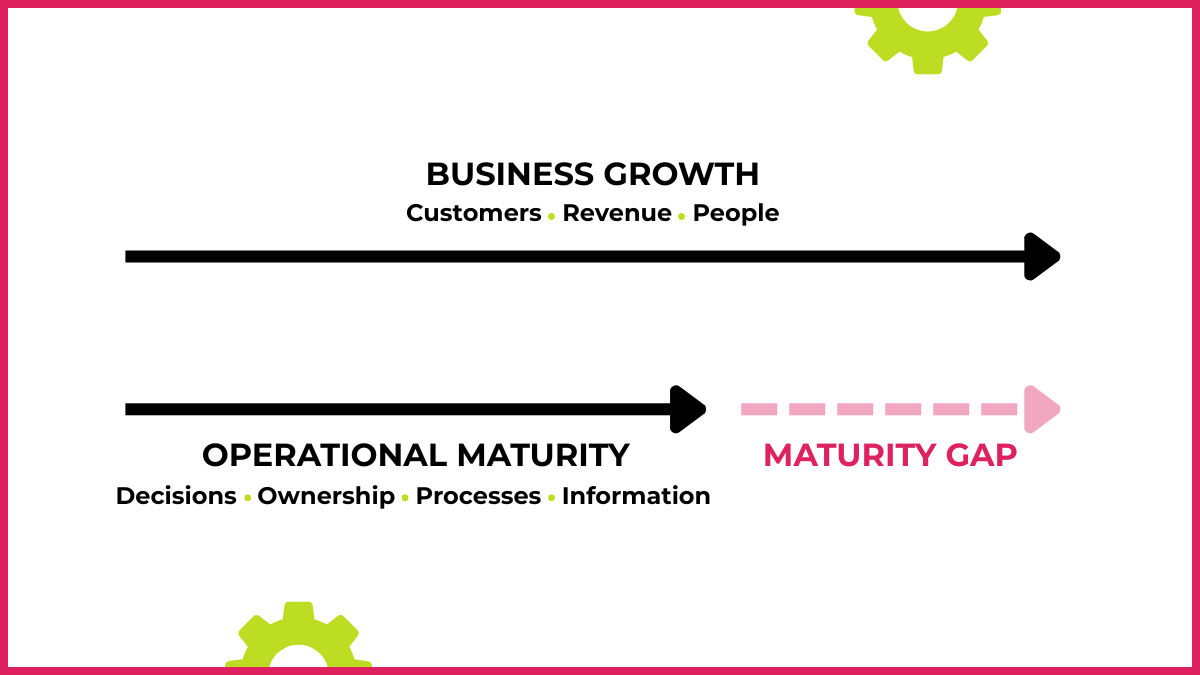
Ideally, these two journeys progress together. Reality? That hardly ever happens in scaling businesses. Instead, the business growth trajectory usually outpaces operational maturity, creating a gap between the complexity of the business and its ability to manage it effectively. That's the Maturity Gap.
Now, let me reassure you: you'll never keep these two perfectly aligned. In a scaling business, that's almost impossible. Businesses move too quickly for operational maturity to keep pace at every single moment. There will almost always be some gap, so don't stress about it or waste your energy trying to eliminate it completely. What matters is keeping an eye on it and making sure it stays small enough for the business to continue growing without unnecessary setbacks.
Why do businesses fall into the Maturity Gap?
Where do I even start?! There are probably dozens of reasons, and I'm sure there are some I haven't even come across yet. But there are three patterns I see time and time again across scaling businesses.
“We're not big enough yet.”
An absolute classic! Many businesses believe they don't need proper operations (or sometimes operations at all) until they reach a certain size. And if you're a team of five with no intention of growing any further, that might actually be true. But if your ambition is to scale, it's a very different story.
What happens if you hire another five people over the next six months? And then another five after that? How do they know which processes to follow? Where do they find the information they need? How are decisions made? Who approves what? Without some operational foundations in place, things get messy really quickly. Businesses that wait until they're "big enough" to think seriously about operations often find themselves with a Maturity Gap that's much harder to close later on.

This belief frustrated me so much that I ended up writing a separate article about it: How much structure does a scaling business really need. The short answer? Probably less than you think, but almost certainly more than none.
“We'll figure it out as we go.”
Most businesses know they'll need to adapt as they grow. They just don't spend much time thinking about what that means operationally. There's the excitement of growth, strategic planning, financial planning, hiring, sales targets and client delivery. No one wakes up wondering whether the business is operationally ready for what's coming. Instead, it's much easier to assume everything will be fine for a while and that you'll figure things out as you go.
If growth were steady and predictable, maybe that approach would work. But it rarely is…. One month you're hiring. Next you're entering a new market. Then a key person leaves. Then three new clients arrive at once. That's scaling for you. So when exactly are we planning to figure things out?
What usually happens instead is that businesses don't evolve the way they operate. They rely on workarounds, solve problems as they appear and create temporary fixes that actually become permanent. Over time, those operational weaknesses build on top of one another, making the Maturity Gap increasingly difficult to close.
“We don't want bureaucracy.”
This one's a little different. By this point, businesses often know their operations need to change, but they hesitate because they're worried about introducing bureaucracy. And that one I can actually understand.
Many of us have experienced poor processes or unnecessary bureaucracy at some point in our careers. Long approvals, documents nobody reads, processes with far too many steps, and so on. Sometimes, just one or two experiences like that are enough to make people avoid anything that even resembles bureaucracy. On top of that, today's businesses are under constant pressure to move quickly. Speed and agility are no longer optional, so nobody wants to introduce anything that might slow the business down.

What I find fascinating, though, is that in trying so hard to avoid bureaucracy, many businesses willingly accept the growing headaches of informal operations instead. They tolerate confusion, repeated mistakes, unclear ownership, constant firefighting and all the other costs that come with them, rather than looking for a better alternative. But here's the question: are you sure those things aren't already slowing the business down?
Operational maturity is that better alternative. It's not the same as bureaucracy, not even close. Done well, it simply gives the business the level of structure it needs to support speed and agility as it grows.
What does the Maturity Gap look like?
If you were hoping for a checklist with ten signs to look out for, I'm afraid I don’t have one. It’s because the Maturity Gap doesn't have one particular look. Every business scales differently, so the gap shows up differently too. Ultimately, it comes down to judgement. Looking at what's happening in your business and asking yourself whether your operations are really keeping pace with your growth.
One question I find particularly useful is this:
Is this harder than it needs to be?
If the answer is yes, there's a good chance your operational maturity isn't keeping up with the complexity of your business.
Let me show you what I mean.
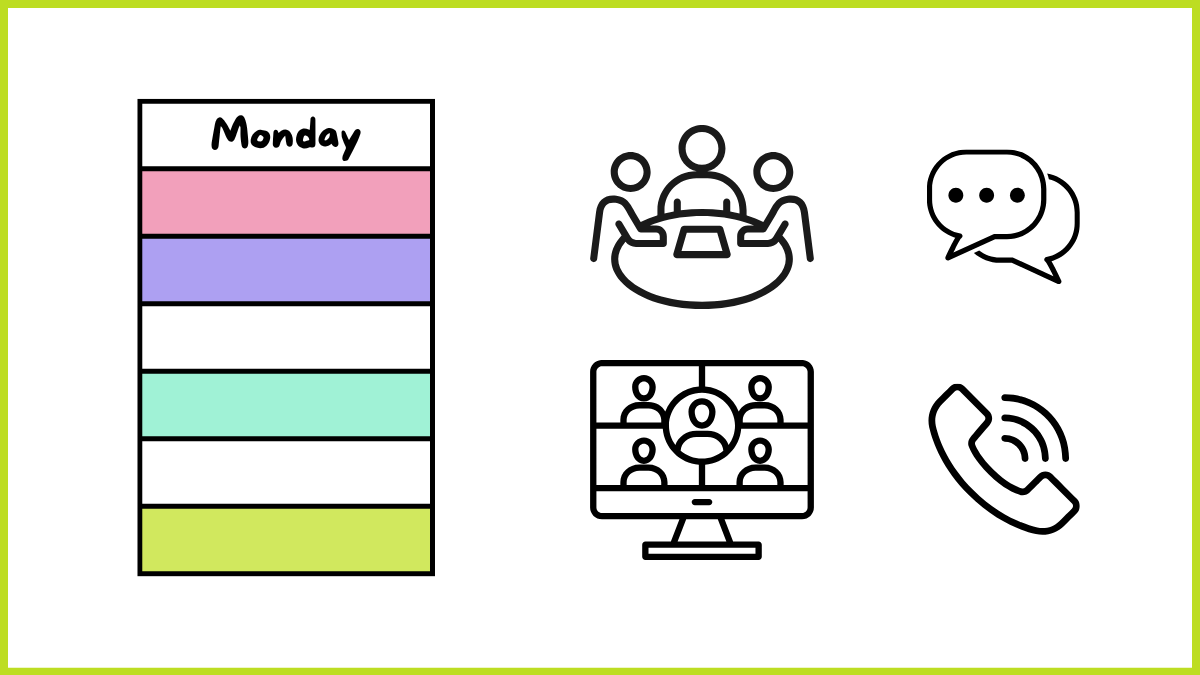
Take meetings, for example. Let me just say it: I've got nothing against meetings. They can be incredibly useful. But many smaller businesses get used to having conversations and meetings as their primary way of communicating and making decisions. As the business grows, the operating model stays the same, but the number of people, decisions and dependencies increases. Naturally, meetings multiply. Before long, some people spend most of their day answering questions, attending meetings and coordinating work instead of getting their own work done. So, is this harder than it needs to be? I'd say yes. By this stage, the business should probably be relying less on conversations and more on operationally mature ways of working, such as better information sharing, clearer ownership and lightweight processes that reduce the need for another meeting.
Or take working with vendors. In many smaller businesses, there isn't really such a thing as procurement or formal vendor onboarding. Someone signs up a new vendor, gives Finance a quick heads-up and everyone carries on. It works because there are only a handful of vendors and everyone knows what's going on.
But what happens when the business starts growing? New vendors are added quickly. You start working with a much wider range of suppliers, from large strategic partners to niche providers. But if nothing changes in the way vendors are onboarded, things quickly become messy. Nobody carries out proper vetting, which introduces unnecessary risks. People don't fully understand who the new vendors are or what services they're providing. Teams are asked to use tools they've never been trained on. Finance often doesn't hear about a new supplier until an invoice lands in their inbox from a company they've never seen before. Would a more operationally mature business handle this differently? Almost certainly.
One more example? Everyday work. It's easy to assume that people are simply busier because the business has grown. Sometimes that's true. But sometimes work takes longer because people are searching for information, waiting for approvals, clarifying responsibilities or trying to understand how something should be done. The work itself hasn't necessarily become more difficult. But navigating the business certainly has.
You'll almost certainly come across many more situations in your business where something doesn't feel quite right. And now you've got one simple question to help you recognise whether you're looking at a Maturity Gap: Is this harder than it needs to be? Keep asking it.
Why does it matter?
While some people might think the Maturity Gap is an Operations problem, it really isn't. It's a business problem. And a serious one too. Left unaddressed for too long, it starts limiting what the business is capable of becoming. It affects financial performance, people, resilience and, ultimately, the business's ability to keep growing.
It costs more than you think.
Let's start here because money is the language most businesses understand. Some of the costs are easy to spot. You hire more people because the business can't cope. You create additional management layers to improve coordination. You buy more software to fix problems that aren't really technology problems in the first place. But there are many hidden costs too: mistakes that need correcting, projects that get delayed or hours spent searching for information. You may miss out on opportunities because a proposal wasn't sent to a prospect quickly enough and they chose someone else instead. That’s a hidden cost too.

Every business has hidden costs that don't end up on the spreadsheet. So whatever numbers you might have in front of you, remember that the real cost of running the business is almost certainly higher. How much higher? One of the factors that determines that is the size of your Maturity Gap.
It affects everyone.
Your employees experience the Maturity Gap through constant firefighting, frustration, unclear ownership and unnecessary day-to-day challenges. Over time, that affects motivation, engagement and ultimately retention.
Your customers feel it too. They experience slower responses, inconsistent service, mistakes and unnecessary delays. And when customers stop trusting the business to deliver consistently, they eventually stop being customers.
Even your vendors can feel it. Yes, the very businesses you're paying. If working with you means constant last-minute requests, unclear communication, delayed decisions or late payments, don't be surprised if they eventually decide their time is better spent elsewhere.
It makes the business fragile.
Think about building a house. The bigger the building, the stronger its foundations need to be. You wouldn't expect to keep adding floors without making sure the foundations could support them. The same is true for scaling a business. As complexity grows, operational foundations need to grow with it. Otherwise, the business becomes increasingly fragile.
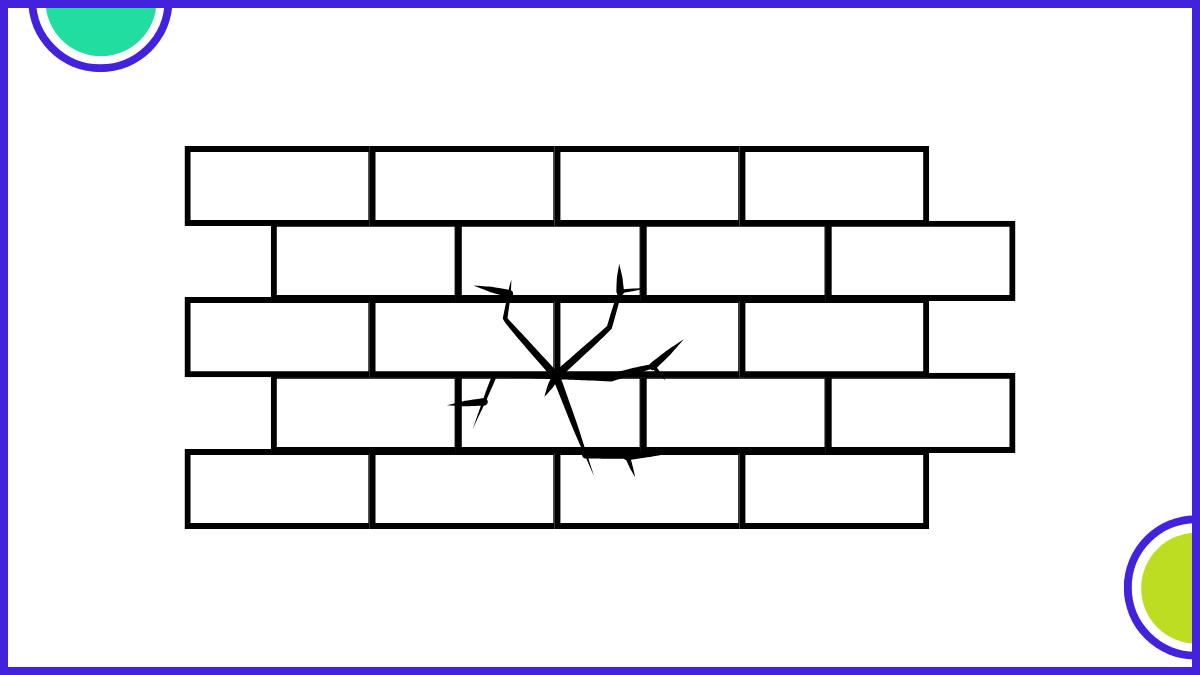
Events such as a key person leaving, landing a major client or new regulations coming into force should simply be part of running a growing business. But when operational maturity has fallen behind for too long, they can have a totally disproportionate and unexpected impact, creating disruption across multiple parts of the business.
Eventually, it limits growth itself.
Every new customer, product, market or regulatory obligation introduces another layer of complexity. Without the operational maturity to absorb that complexity, growth becomes increasingly difficult to sustain. Eventually, the business reaches a point where it isn't demand, ambition or opportunity holding it back but the way it operates.
The Role of Operations
Remember earlier when I said that nobody wakes up wondering whether the business is operationally ready for what's coming? Well, someone has to… Someone has to be looking ahead. Someone has to notice when the business has outgrown the way it operates. Someone has to keep asking what needs to evolve next.
To me, that's the essence of Operations leadership in a scaling business.
However you land your Ops leadership role, and whatever responsibilities you end up taking on, make sure this one always stays at the top of your list. As the business continues to grow, keep asking yourself one simple question: Is this harder than it needs to be? Keep asking it often. Keep asking it across every aspect of the business. If the answer is yes, you've likely just found your next priority.
Next Steps
Assess where your business is today: Think about how your business has changed over the last 12–24 months. As you look across the business, keep asking yourself: Is this harder than it needs to be? Every "yes" is a clue that operational maturity may not be keeping pace with business growth.
Map your Maturity Gap: Write down every area where the answer was "yes". Don't worry if the list is long. This will help you understand how big your Maturity Gap is and where it's showing up across the business.
Start with one area: Choose the area that feels most important to the business today. Before you do, I'd encourage you to read my article Operational frictions: how to identify what's really slowing your business down. In Operations, we sometimes focus on the surface-level issues while the real causes lie elsewhere. On top of that, several different problems can often share the same underlying cause. That article will help you tell the difference, so you can focus your efforts where they'll have the biggest impact.